
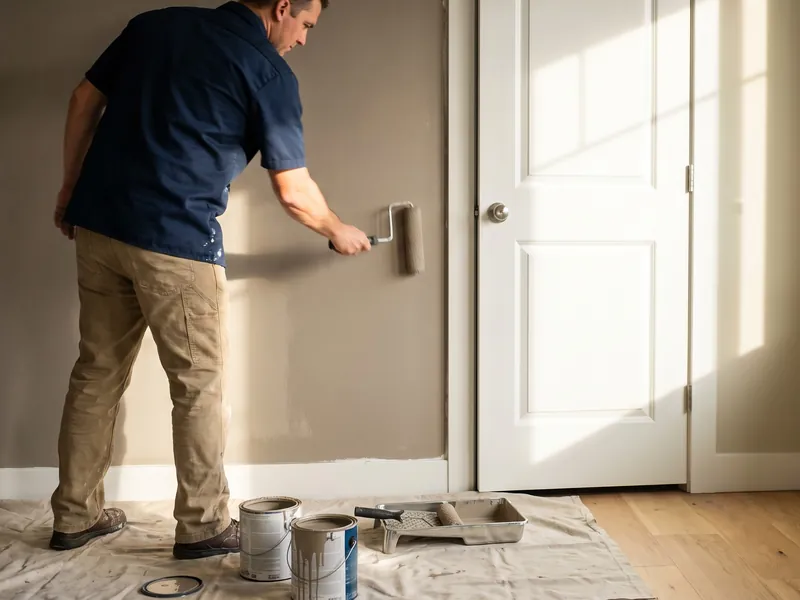
Eggshell vs satin paint is one of the most common finish questions homeowners ask before an interior repaint. Both are mid sheen finishes that look similar on the chip, but they behave differently on real walls: one hides more, the other cleans better. Choosing the right one for each room makes a paint job look better and last longer.
In short: eggshell has a soft, low sheen that hides wall flaws well and suits bedrooms, living rooms, and dining rooms. Satin is a little shinier and more scrubbable, so it works better in hallways, kids’ rooms, and family rooms. Kitchens, baths, and trim usually call for semi gloss.
What is the difference between eggshell and satin paint?
The difference is the amount of light the paint reflects. Eggshell sits just above flat and matte, with a soft glow. Satin sits one step higher, with a smoother, pearl like sheen. More sheen means a harder, more washable surface, but it also means more light bouncing off the wall, which makes bumps, patches, and roller marks easier to see.
| Eggshell | Satin | |
|---|---|---|
| Sheen | Low, soft glow | Medium, pearl like |
| Hides wall imperfections | Better | Less |
| Washability | Good | Better |
| Best rooms | Bedrooms, living and dining rooms | Hallways, kids’ rooms, family rooms |
| Touch ups | Blend more easily | More likely to show |
Where to use eggshell paint
Eggshell is the go to wall finish for most of a home. Sherwin-Williams describes its eggshell finish as easily washable, balancing durability and elegance, and suited to hallways, woodwork, children’s bedrooms, and family rooms. In practice, homeowners often choose it for:
- Living rooms and dining rooms
- Bedrooms and home offices
- Walls with minor imperfections or drywall repairs
Where to use satin paint
Satin is the better choice where walls get touched, bumped, and wiped often. Sherwin-Williams recommends its satin finish for high traffic rooms such as hallways and family rooms, describing it as easily washable. Good places for satin include:
- Hallways, stairways, and mudrooms
- Kids’ rooms and playrooms
- Laundry rooms and some kitchens with good walls
What about flat, semi gloss, and gloss?
Flat and matte hide the most imperfections. Sherwin-Williams lists flat for ceilings, adult bedrooms, formal living rooms, and uneven or textured walls, but notes that flat paint can be more challenging to maintain because it is prone to scuffs and stains.
Semi gloss is recommended for kitchens, bathrooms, utility areas, closet doors, and trim because it is easy to clean. Gloss and high gloss are the most reflective and durable, and are used on trim, doors, windows, and cabinets. For painted cabinets, see our guide to cabinet colors for small kitchens, which also covers sheen.
Sheen and wall condition: why prep matters
The higher the sheen, the more honest the wall. Satin and semi gloss show more of every patch, nail pop, and uneven seam that eggshell or matte would soften. If your walls have been repaired, or if you are painting over older drywall with visible seams, eggshell is the safer choice unless the surface is properly prepped first.
Patches also need primer before the finish coat. Without it, the repaired spot can look duller or shinier than the rest of the wall. Our guide to drywall repair cost explains how repairs are prepped for paint.
A simple room by room sheen plan
- Ceilings: flat.
- Living rooms, dining rooms, bedrooms: eggshell or matte.
- Hallways, kids’ rooms, family rooms: satin.
- Kitchens and bathrooms: satin or semi gloss.
- Trim, doors, and cabinets: semi gloss or gloss.
Once you settle eggshell vs satin for the walls, keeping one sheen per surface type throughout the house also makes future touch ups easier, because you only need a few cans on hand.
Get help choosing finishes for your home
Sheen, including the eggshell vs satin choice, is one of the details our crews walk through on every interior estimate, along with color, prep, and schedule. If the fresh paint smell is a concern, our guide on how to get rid of paint smell has practical tips. To plan your project, explore our interior house painting service or request a free estimate anywhere in Boise, Meridian, Eagle, Nampa, or Caldwell.
Frequently asked questions about eggshell vs satin paint
Is eggshell or satin better for walls?
For most living spaces and bedrooms, eggshell is better because it hides imperfections and has a soft look. For high traffic areas like hallways and kids’ rooms, satin is better because it is more washable.
Is satin shinier than eggshell?
Yes. Satin has a slightly higher sheen than eggshell, which makes it a bit more reflective, more durable, and easier to clean, but also more likely to show wall flaws.
Can you use satin paint in a bedroom?
You can, especially in a kids’ room that needs frequent cleaning. For adult bedrooms, many people prefer eggshell or matte for a softer, calmer look.
What sheen is best for bathrooms and kitchens?
Semi gloss is the traditional choice for kitchens and bathrooms because it cleans easily. Satin also works in well ventilated bathrooms and kitchens with smooth walls.
Can you paint satin over eggshell?
Yes. You can change sheen when repainting, as long as the surface is clean and sound. Going to a higher sheen will make existing wall flaws more visible, so prep matters.
Which is easier to touch up, eggshell or satin?
Eggshell is easier to touch up because its lower sheen blends new paint into old more smoothly. Touch ups on satin are more likely to show as slightly different patches.
Egg shell vs satin: which should I pick?
Pick egg shell for living rooms and bedrooms where you want a soft finish, and satin for hallways and busy rooms where walls need regular cleaning.
Sources consulted
- Sherwin-Williams: How to Choose Paint Finishes