Cabinet toning is a finishing technique that adjusts or evens out the existing color of wood cabinets without fully stripping or repainting them. It works with the wood grain still visible, rather than covering it with an opaque coat like paint.
In short: toning applies thin, tinted layers of finish over existing wood or stain to correct color, blend repairs, or shift the tone slightly, while painting and refinishing involve stripping down to bare wood or applying a fully opaque coat.
How cabinet toning works
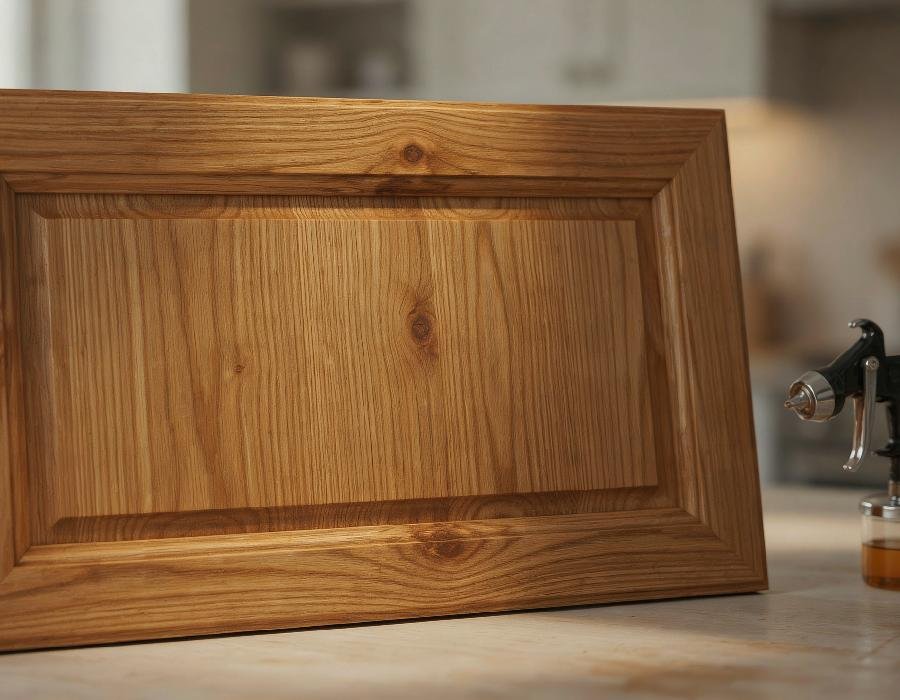
A toning coat is a semi transparent layer of tinted finish sprayed over the existing wood, stain, or clear coat. Because it is translucent, the natural wood grain still shows through, just with an adjusted color or tone on top.
Multiple thin coats can be built up gradually until the color reaches the target shade, which gives a finisher precise control that a single stain application does not offer.
Cabinet toning versus painting
Painting fully covers the wood with an opaque color, hiding the grain completely and giving cabinets a solid, uniform look. Toning keeps the wood grain visible and simply shifts or evens out the existing tone, which suits homeowners who like their wood cabinets but want a warmer, cooler, or more even color.
If you want a completely different look, such as moving from oak to white, painting is the right process. Our cabinet painting service page covers what that process involves, and our guide to cabinet colors for small kitchens helps you choose the new color.
Cabinet toning versus refinishing
Refinishing usually means stripping the old finish down to bare wood, then reapplying stain and topcoat from scratch. Toning skips the stripping step entirely and works on top of the existing finish, which makes it faster and less invasive when the wood itself is in good shape.
For a full breakdown of the strip and reapply process, see our guide on kitchen cabinet refinishing in Boise.
When toning makes more sense than a full refinish
Toning is a strong fit when the wood itself is in solid condition but the color has faded unevenly, clashes with new countertops or flooring, or just looks slightly off after years of sun exposure. It also works well to blend in a repaired section so it matches the surrounding cabinet color.
If the finish is peeling, heavily scratched, or the wood has water damage, a full refinish or repaint will hold up better long term than toning alone.
What the process looks like in your kitchen
A toning project starts with a light clean and scuff of the existing surface, just enough to help the new coat adhere without removing the old finish. The tinted coat is then sprayed on in thin layers, with drying time between each pass so the color builds evenly.
A clear topcoat usually seals the final color and adds protection against daily wear, moisture, and cleaning. Doors and drawers are typically finished off site or in a controlled area to keep the spray even and free of dust.
How long cabinet toning takes
Toning is generally faster than a full refinish since there is no stripping stage involved. Most kitchens finish in two to four days depending on the number of doors, drawers, and how many toning coats are needed to reach the target color.
Get a toning or refinishing estimate for your kitchen
Deciding between toning, refinishing, and painting depends on the current condition of your cabinets and the look you want. If you are not sure which fits your kitchen, request a free quote and we will take a look and recommend the right process, not just the most expensive one.