
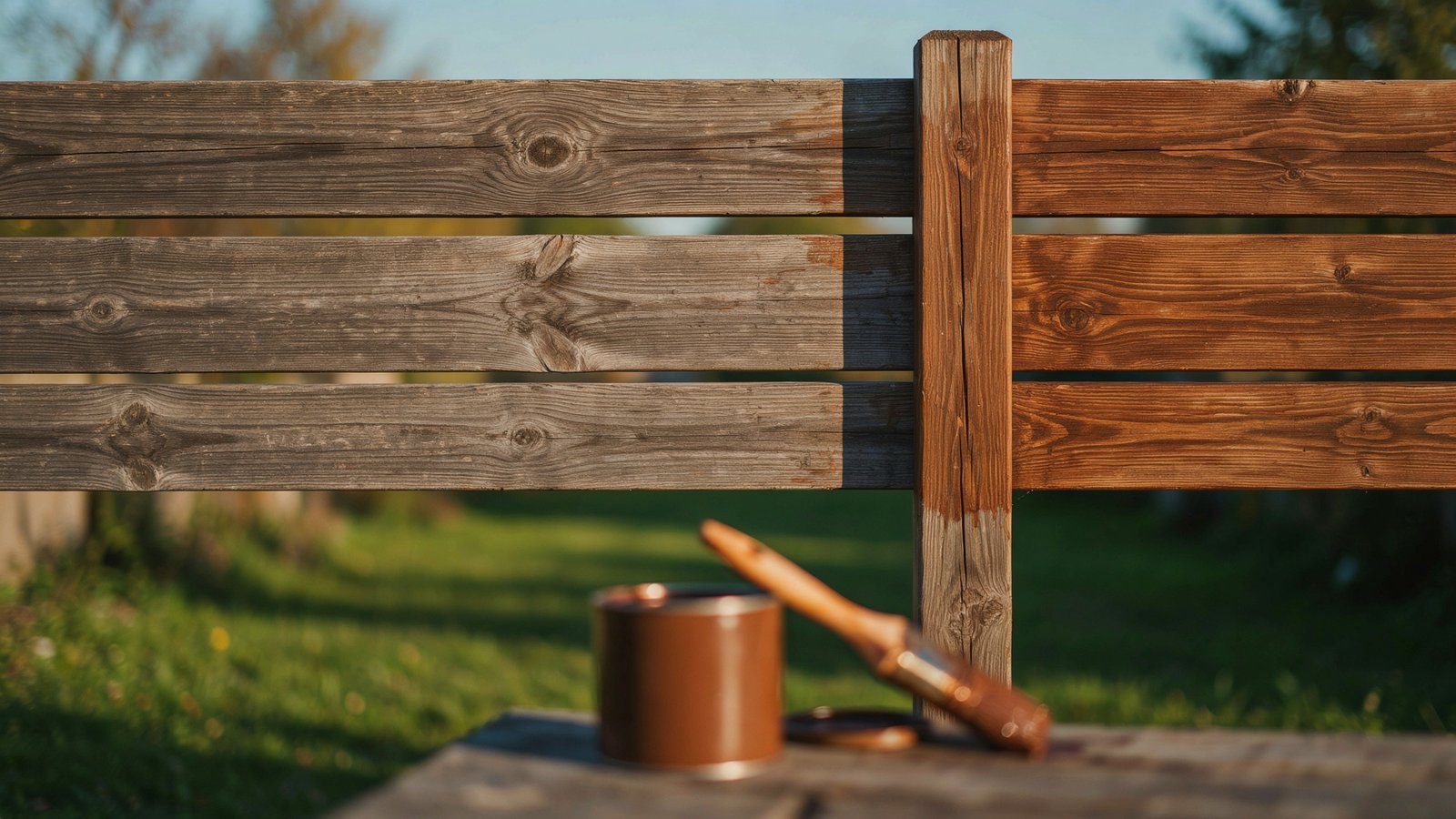
Fence painting and staining in Caldwell protects wood from Idaho’s dry summers and wet, freezing winters while keeping your yard looking finished. Most wood fences need a fresh coat every two to four years, depending on sun exposure and the product used.
In short: paint gives a solid, opaque color and slightly longer lasting protection, while stain lets the wood grain show through and is generally easier to touch up over time.
Why Caldwell fences need regular attention
Wood expands and contracts through hot, dry summers and cold, wet winters, which stresses any finish over time and eventually leads to cracking, graying, or peeling. Unprotected wood left too long can start to warp, split, or rot at ground contact points.
A fresh coat every few years is far less expensive than replacing sections of fence that have deteriorated past the point of a simple refinish.
Paint versus stain for a wood fence
Paint forms a solid film on top of the wood, fully covering the grain with an opaque color and offering strong protection against moisture and UV exposure. It tends to show wear as chipping or peeling once it starts to fail, which is more visible than a fading stain.
Stain soaks into the wood rather than sitting on top, letting the natural grain show through while still protecting against moisture. It generally fades more gradually and evenly, which makes touch ups simpler since there is no film to scrape or feather in.
How often to repaint or restain a fence
Most stained fences in the Treasure Valley need a fresh coat every two to three years, while a well applied paint job can last three to five years before it needs attention. South and west facing sections that get the most direct sun typically wear faster than shaded sides.
Checking the fence each spring for graying wood, peeling spots, or water absorption, which shows as darkened wood when it rains, helps catch the right time before damage sets in.
Preparing a fence before painting or staining
Old, peeling finish and surface dirt need to come off before new paint or stain goes on, usually through pressure washing or scraping and light sanding. Our guide to pressure washing in the Treasure Valley covers what that cleaning step involves.
Any damaged boards, loose nails, or rotted sections should be repaired before finishing, since paint or stain will not fix structural wood problems and can trap moisture against damaged areas.
Choosing a finish for Caldwell’s climate
A finish rated for exterior use with UV protection matters more in this climate than the specific brand, since sun exposure is often the biggest factor in how fast a fence fades or fails. Semi transparent and solid color stains both hold up well here, with solid stains offering a bit more UV resistance for fences in full sun.
For fences near sprinklers or low areas that stay damp, a finish with strong water resistance helps prevent the early graying and mildew that shows up in those spots first.
What professional fence painting includes
A full service typically covers washing, minor repairs, masking off gates and hardware, and two coats of paint or stain applied by brush, roller, or sprayer depending on the fence style. Picket, privacy, and split rail fences each take different amounts of time and product due to surface area and detail work.
Weather timing matters too, since paint and stain need dry conditions and moderate temperatures to cure properly, which is why most fence projects in the area happen in spring through early fall.
Our deck and fence painting service protects fences and decks across the Treasure Valley, and our office is right here in Caldwell.
Get your Caldwell fence painted or stained
A properly prepped and finished fence protects your investment and keeps your yard looking sharp for years. Request a free quote for fence painting or staining in Caldwell and the surrounding Treasure Valley