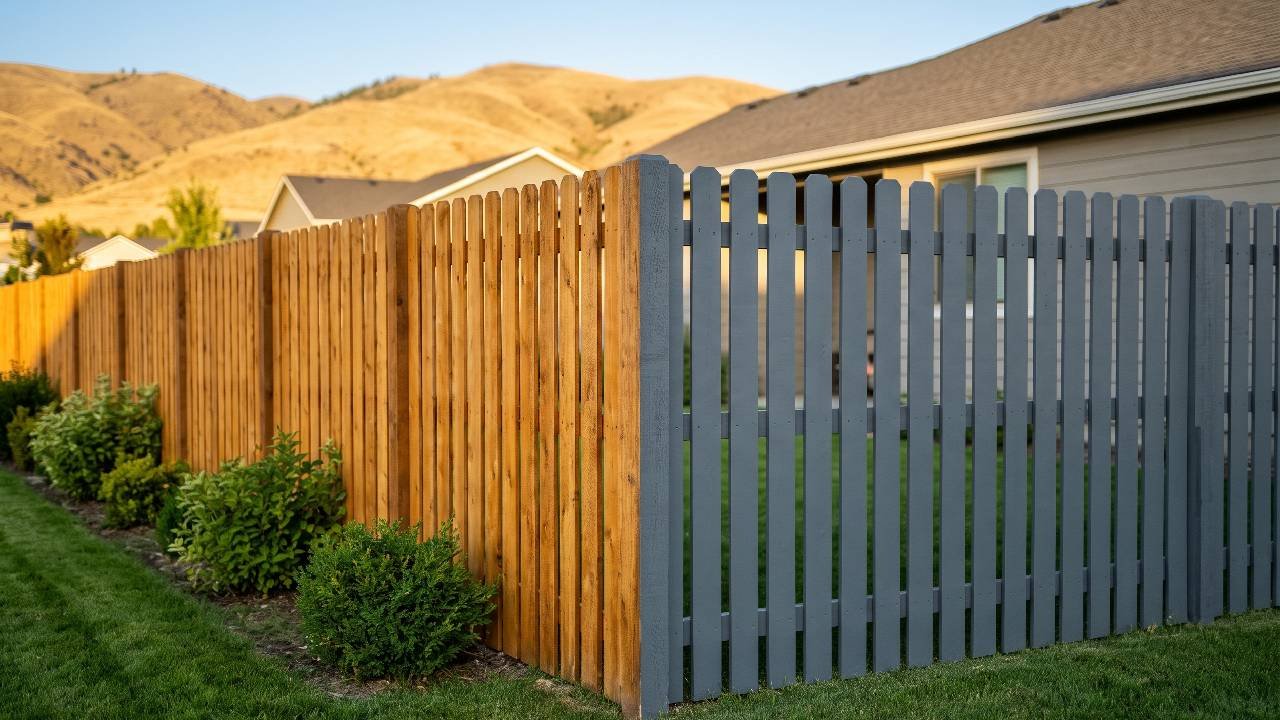
Fence paint vs stain is the decision Eagle homeowners face when weathered cedar or pine stops looking cared for. Paint builds an opaque film and wider color range. Stain penetrates and highlights grain while usually avoiding classic peel patterns when prep is right.
Sherwin-Williams explains that paint sits on top of wood like a coat, while stain behaves more like a dye that becomes part of the wood. Your sun exposure, wood condition, and maintenance preference should drive the choice more than a neighbor’s photo alone.
How Paint and Stain Protect Wood Differently
Paint generally offers strong UV blocking and full color coverage, which helps hide mismatched boards. It can peel if moisture moves behind a failing film. Stain soaks in, shows grain, and typically weathers by fading rather than peeling, which can simplify future prep.
Solid stains sit between clear translucent looks and full paint opacity. Confirm product category on the label before you buy.
Eagle Sun, Wind, and Wood Reality
West and south fence runs in Eagle take hard ultraviolet light. Dark paints and solid colors can fade or chalk sooner on those faces. New lumber may need drying time before coating; wet wood traps problems under any finish.
Irrigation overspray and lawn fertilizer stains also affect lower rails. Clean before coating so contaminants do not block adhesion.
When Paint Is the Better Call
Choose paint when you need to hide heavy discoloration, want a specific brand color match to trim, or prefer a fully opaque neighborhood look. Paint also helps when boards are uneven in tone and you do not want grain contrast.
Plan on sound scraping of failed old paint before recoating. Painting over active peel multiplies future scraping.
When Stain Is the Better Call
Choose stain when wood is in fair shape and you like natural character. Semi-transparent products showcase grain; solid stains hide more while still behaving differently from paint. Sherwin-Williams fence guidance often notes staining can be simpler to refresh because you are not always fighting peel.
Revisit fence paint vs stain after you inspect the worst sunny side, not only the shaded gate area.
Prep Shared by Both Paths
Remove dirt, mildew, and loose fibers. Replace rotten boards. Allow washed wood to dry fully. Surface preparation quality matters as much as brand choice. Back-brushing after spray application helps drive product into profiles.
Lagunas offers deck and fence painting across the valley. Eagle context sits on the Eagle page, and Caldwell readers can compare notes with fence painting in Caldwell.
Maintenance Expectations
No exterior wood finish is permanent. Plan periodic cleaning and refresh cycles based on product data and sun load. Touch failed spots early instead of waiting for full-fence failure.
If HOA rules limit colors, bring the approved palette to the estimate.
Get an Eagle Fence Finish Estimate
Call (208) 293-8547 or request a free estimate online. Lagunas Painting Idaho can walk your fence line, explain fence paint vs stain for your wood and sun exposure, and provide a written Eagle-area estimate.
Sources
- Sherwin-Williams – When to Stain vs. Paint
- Sherwin-Williams – How to Stain a Wood Fence
- Sherwin-Williams – How to Paint a Wood Fence
- Birkdale – Paint or Stain Fence
Frequently Asked Questions About Fence Paint vs Stain
Is fence paint vs stain settled by climate alone?
Climate matters, but wood condition and look preferences matter too. Sunny Eagle runs often favor thoughtful UV strategy. Inspect the worst elevation before you decide.
Which lasts longer on a wood fence?
Paint can last longer between full recoats in some conditions, yet peeling adds prep later. Stain often fades instead of peeling. Product quality and prep change outcomes.
Can I stain over old paint?
Usually not successfully without removing or breaking the paint film so product can penetrate. Gel approaches exist but look different from stain on bare wood. Expect extra prep.
How soon can new fencing be coated?
Many manufacturers recommend waiting until moisture content drops. Coating wet lumber risks failure. Ask your installer for a moisture check approach.
Do I need to pressure wash first?
Cleaning helps, but excessive pressure can raise grain or damage fibers. Soft washing or controlled cleaning may fit better. Let wood dry fully afterward.
What colors work with HOA rules in Eagle?
Bring written HOA guidelines to the estimate. Neutral stains and approved paint colors vary by subdivision. Approvals can add calendar time.
Is solid stain the same as paint?
No. Solid stain still differs chemically and in how it weathers. Read labels and data sheets. Your painter should name the exact product category.
Should decks and fences use the same product?
Not always. Horizontal deck boards take different wear than vertical fence pickets. Product lines often separate deck and fence recommendations.