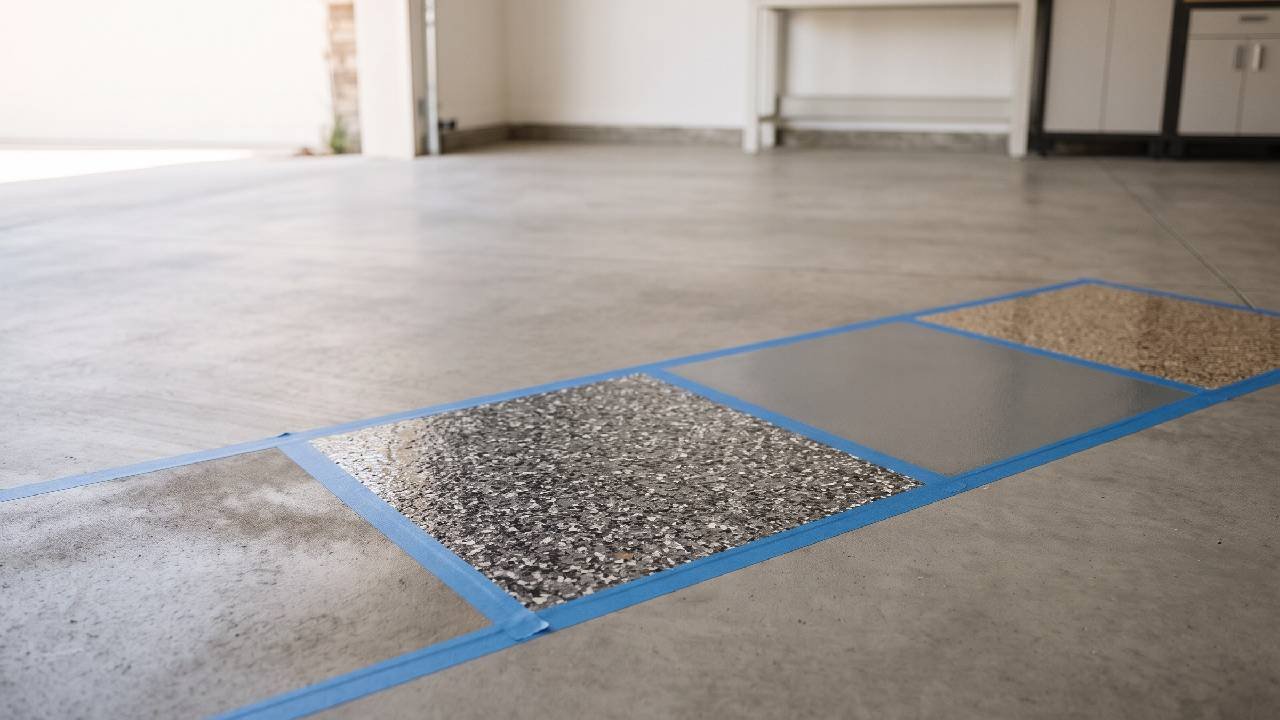
Concrete coatings protect and decorate slabs in Treasure Valley garages, patios, shops, and light commercial floors. Choosing among sealers, epoxy systems, polyurea or polyaspartic builds, and decorative flake finishes starts with how the floor is used, not with the prettiest sample chip alone.
Lagunas Painting Idaho publishes a dedicated coatings page and installs epoxy, polyurea, and polyaspartic systems for residential and related concrete work. This article helps you match finish type to traffic, weather exposure, and upkeep habits.
Start With Use Case, Not Color
A covered garage that sees hot tires differs from an open patio that bakes in sun and takes grill grease. Interior shop floors may need chemical resistance; pool decks need UV and slip considerations. Write down vehicles, pets, cleaning chemicals, and sun exposure before you shop samples.
Wrong chemistry on the right color still fails early.
Sealers Versus Film-Building Systems
Clear sealers can reduce dusting and darken the slab with a modest sheen, yet they rarely match the durability of multi-coat film systems under vehicle traffic. Film-building systems such as epoxy builds create a thicker wear surface when prep is correct.
Ask whether the proposal is a sealer, a thin paint-like coating, or a multi-layer professional system. Those terms sound similar in casual conversation and are not interchangeable.
Epoxy, Polyurea, and Polyaspartic Roles
Lagunas lists epoxy, polyurea, and polyaspartic among coatings used on concrete. Epoxy often serves as a durable base. Polyurea and polyaspartic products may be selected for faster return to service or specific performance targets defined on product data sheets.
Review Treasure Valley concrete coatings and residential epoxy floors. Commercial slabs may also relate to commercial epoxy flooring.
Prep That Makes or Breaks Adhesion
Mechanical profiling, crack repair, moisture evaluation, and degreasing decide bond strength. Shiny, unrepaired, or damp slabs reject coatings. Surface preparation should appear as a line item, not a vague promise.
American Concrete Institute resources emphasize understanding concrete as a substrate; coatings cannot fix active structural movement by themselves.
Decorative Options and Safety Texture
Flake broadcasts hide mottling and can add traction. Metallic looks are specialty aesthetics with different expectations. Exterior textures should balance cleanability with slip resistance when wet.
Choose colors that hide the dirt you actually track in Treasure Valley dust seasons.
Maintenance and Realistic Lifespan Talk
No floor is maintenance-free. Sweep grit, clean spills, and use pads under heavy point loads. Lifespan claims should reference product data and your use pattern, not guaranteed forever language.
If a bid skips moisture testing on a slab with known seepage history, ask why.
Indoor Shops Versus Open Patios
Indoor shops prioritize chemical splash resistance and cleanability under tires or carts. Open patios prioritize UV stability and wet traction near seating. Tell your estimator which scenario dominates so system selection stays honest.
Request a Concrete Coatings Estimate
Call (208) 293-8547 or request a free estimate online. Lagunas Painting Idaho can inspect your slab, explain which coating systems fit the space, and outline prep before any install day.
Sources
- Lagunas Painting Idaho – Concrete Coatings in the Treasure Valley
- American Concrete Institute – ACI concrete.org
- Garage Flooring LLC – Polyurea vs Epoxy
- ArmorGarage – Epoxy floor systems overview
Frequently Asked Questions About Concrete Coatings
Which coatings work outdoors on concrete?
Outdoor slabs need UV-capable systems and texture for wet conditions. Not every interior epoxy is ideal outside. Confirm exterior suitability on the product data sheet during your estimate.
How long before I can walk or drive on a new floor?
Return-to-service depends on product and temperature. Foot traffic often precedes vehicle traffic. Get written windows in your proposal.
Do I need moisture testing?
Many failures trace to moisture vapor or damp slabs. Testing is wise on slabs with history of seepage or ground contact. Ask what tests are included.
Can cracked concrete still be coated?
Repairable cracks can often be treated before coating. Active structural cracks may telegraph through. Inspection decides the path.
What is the difference between sealer and epoxy?
Sealers are typically thinner protection layers. Epoxy and related film systems build thicker wear coats when installed as multi-step systems. Clarify which you are buying.
Are flake floors hard to clean?
Flake floors usually clean with regular sweeping and damp mopping. Aggressive pads can dull finish. Follow the cleaner recommendations from your installer.
Is polyurea always better than epoxy?
Not always. Each chemistry has strengths. Match chemistry to use, timeline, and slab conditions rather than marketing labels alone.
Do concrete coatings smell during install?
Odors vary by product. Ventilation helps. Ask which products are planned if occupants are sensitive.